
HLTH vs. HIMSS
Highlights:
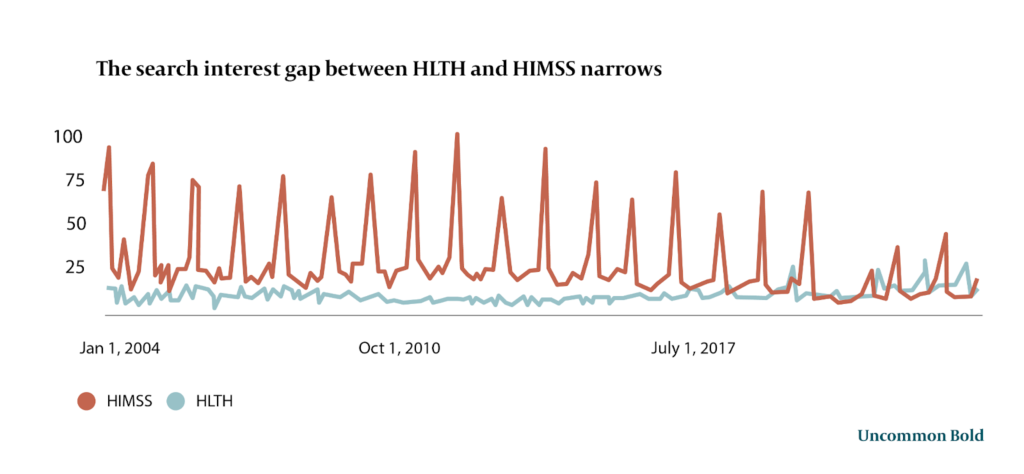
- While HIMSS leads in search interest, its gradual decline over the years has allowed HLTH to catch up and even surpass it
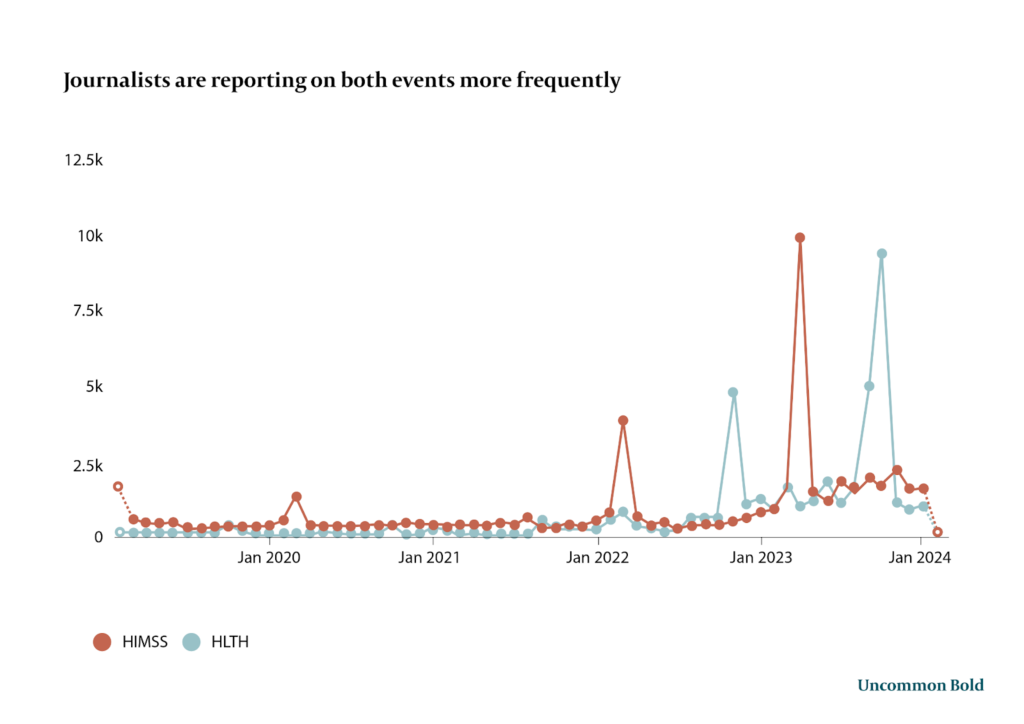
- The use of HIMSS and HLTH among media is similar, with HIMSS carrying a narrow lead
In the vast realm of healthcare technology events, the annual HLTH conference and HIMSS Global Health Conference & Exhibition have become two of the largest, hosting thousands of attendees and notable guest speakers each year. Let’s take a closer look at how HLTH and HIMSS compare.
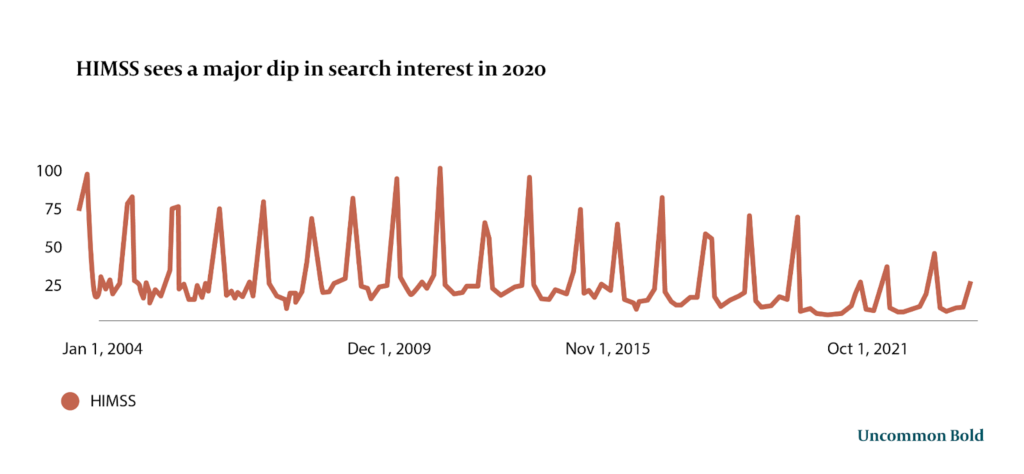
The HIMSS conference (standing for the “Health Information and Management Systems Society”) launched back in 1962 with just 54 attendees. Since then, the conference has grown rapidly, riding the wave of healthcare technology advancement and the rise of health IT throughout the years. HIMSS is now one of the largest conferences in the sector with more than 40,000 attendees on average from all over the globe — now usually held in Orlando, Florida. In 2019, HIMSS attendance hit a peak of 45,000+ only to see its growth come to a halt suddenly in 2020, when the March event — with controversially scheduled keynote speaker President Donald Trump— was canceled just days before the event due to the COVID pandemic.
HIMSS’ event organizers experienced backlash after not refunding exhibitors and sponsors and instead offering partial credits for the HIMSS21 and HIMSS22 events. After a class action lawsuit was launched by one of the exhibitors, HIMSS paid out a $2.8 million settlement. Post-COVID and post-lawsuit, their numbers are climbing again with an attendance rate of 35,000+ for 2023, up 21.5% since 2022.
Attendance numbers are expected to grow even more after Informa Markets, a UK-based events and publishing company, announced plans last year to acquire HIMSS. Informa plans to “use their strength internationally to make [HIMSS] even more global than ever before,” according to Hal Wolf, president and CEO of HIMSS. The acquisition kicks in during March of this year, right in time for HIMSS24. HIMSS has shared that this year will feature an upgraded member experience, including “improved digital features, enhanced registration processes and new product discovery apps.” This transition in ownership signifies a crucial turning point for the conference, and we are curious to see how it may impact the conference’s performance.
HLTH is the much newer event, the challenger. After raising $5 million in VC funding in 2017, HLTH put on the “largest healthcare event launch in history” in 2018 when more than 3,500 attendees, including more than 700 CEOs from 1,750 companies attended. In 2023, the event reported more than 10,000 attendees. HLTH claims to have “created a new model and established a new standard to empower health transformation,” bringing together major industry stakeholders and offering a “personalized experience” that includes tailored journeys for sessions and networking opportunities depending on the type of attendee you are. The event is now tackling international ground, launching HLTH Europe this summer.
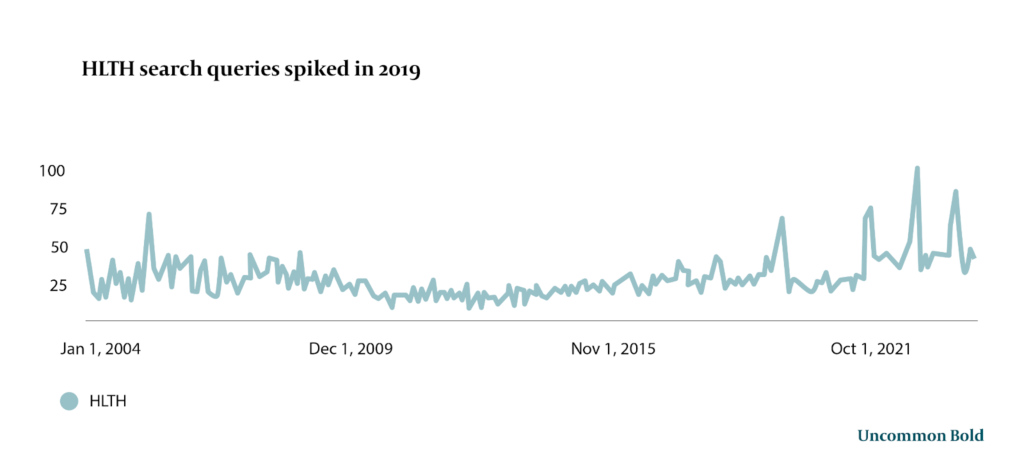
In the last decade, overall search inquiries for HIMSS have created a strong trendline, displaying a cyclical pattern of extreme highs during the spring and deep lows during the summer, aligned with its event schedule. Over time, the peaks have gotten lower and the dips even deeper. When HLTH entered the scene in 2017, its performance was modest compared to HIMSS. In 2019, however, HLTH had a spike so large that the trendlines began to merge, and HLTH surpassed HIMSS in search interest for the first time. This surge in popularity was also evident in HLTH’s attendance numbers, with HLTH seeing 6,000 attendees in 2019 — a nearly 70% increase from 2018.
When the COVID pandemic hit, both terms saw a steep decline in search volume, especially between 2020 and 2021. However, while HLTH has begun to see a noticeable incline post-pandemic, including a peak in 2022, HIMSS has struggled to reach pre-pandemic search levels. Over the past few years, search trends for HLTH have outperformed HIMSS on several occasions. Although HIMSS still leads for overall search interest, the gap is quickly narrowing.
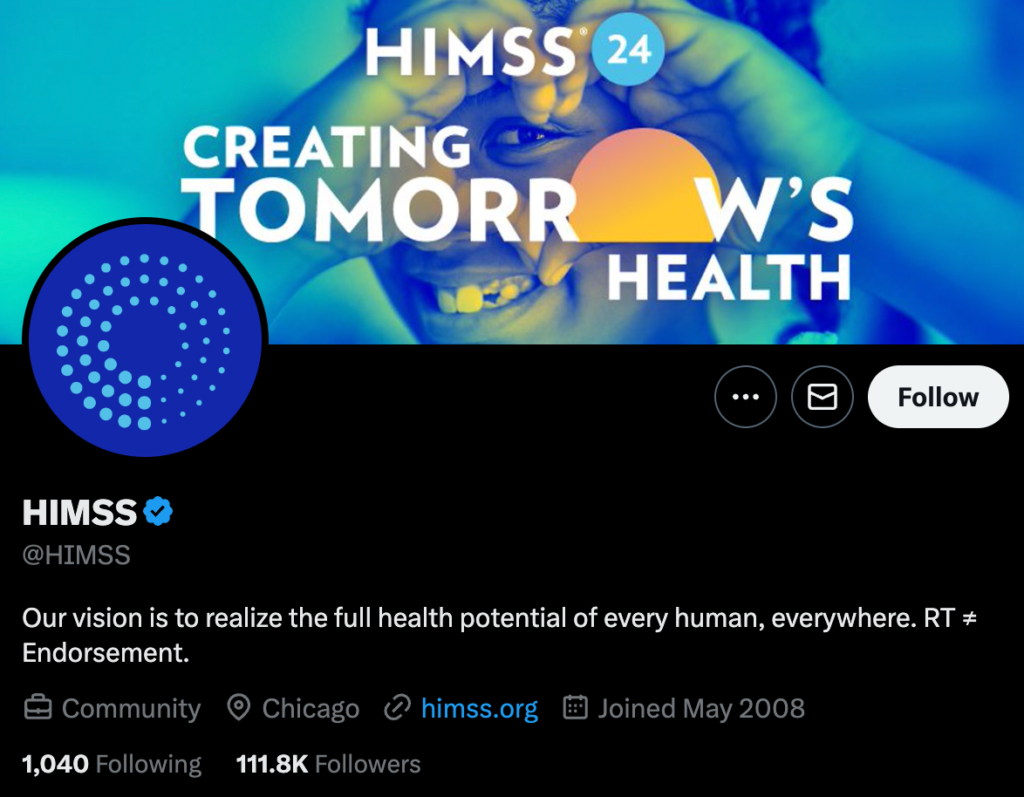
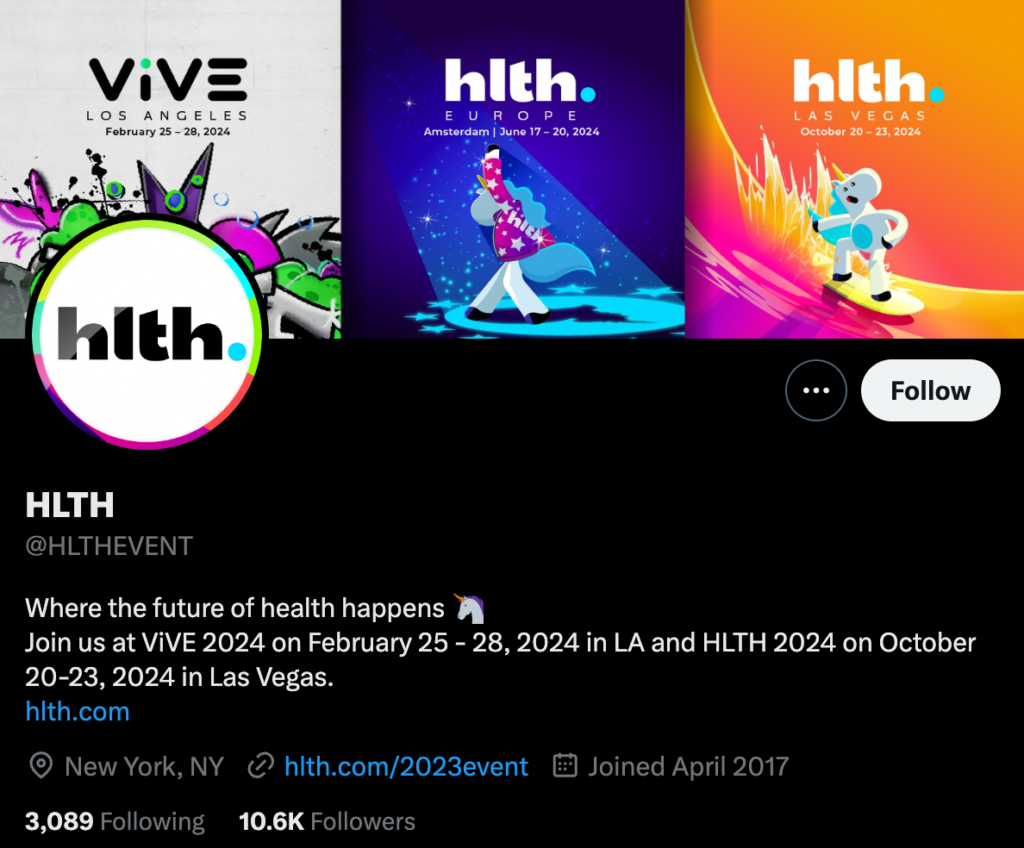
When analyzing social media following on LinkedIn and X, HIMSS leads across the board, with 112,000 for both LinkedIn and X compared to HLTH’s 42,000 and 10,600, respectively. Staff size showed a similar dynamic, with HIMSS having 707 “associated members” on LinkedIn and HLTH having 83.
While HIMSS has consistently seen more traction for search interest and on socials, it’s a different story for media interest, as the two terms have similar reporting patterns and have both seen their largest peaks yet in 2023. These peaks occurred during the months corresponding to each event’s respective date when online chatter among journalists was at an all-time high.
In 2021, HLTH partnered with professional healthcare IT organization CHIME to launch ViVE, a new annual digital health event. Similar to HIMSS, ViVE is held during the spring season and is described as being “like HLTH, but for hospital CIOs,” targeting the same audience demographic as HIMSS.
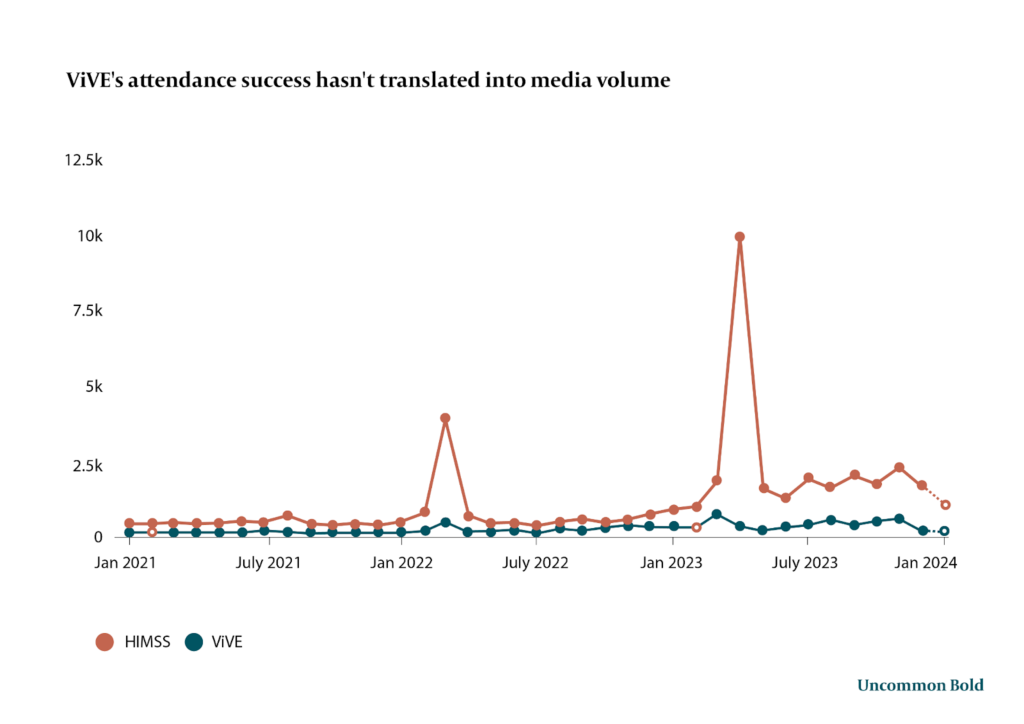
While ViVE had a strong kickoff with 5,000 attendees at its inaugural event in 2022 and 7,600 last year, its social media following and media use have not reflected the same level of engagement. ViVE has about 13,000 followers across LinkedIn and X combined — roughly 17 times smaller than HIMSS’ social following on the same platforms — and HIMSS has earned about six times the amount of media coverage as ViVE over the past three years. HIMSS leads by a large margin across these metrics, but the trendlines for ViVE’s media interest have been close to outperforming HIMSS during the months leading up to the spring events.
If you’re in the digital health industry, it’s smart to continue betting on HIMSS, although HLTH is a strong competitor to watch, especially on the media front. What do you predict for the future of these two events? Are there other emerging healthcare events on the horizon to keep an eye out for?