
EHR vs. EMR
Highlights:
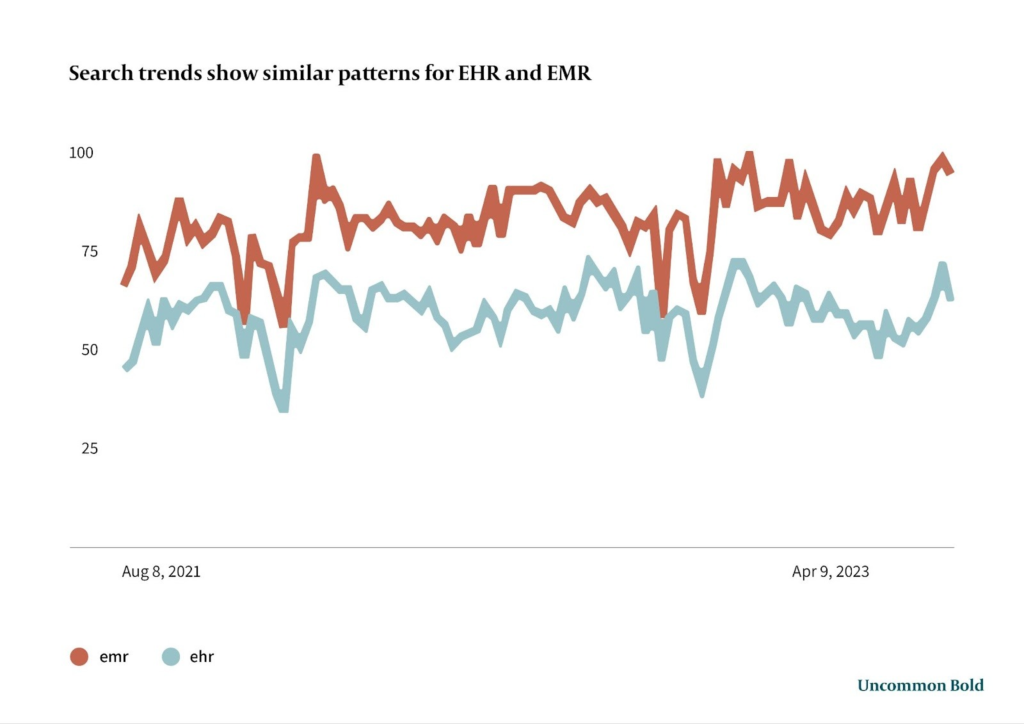
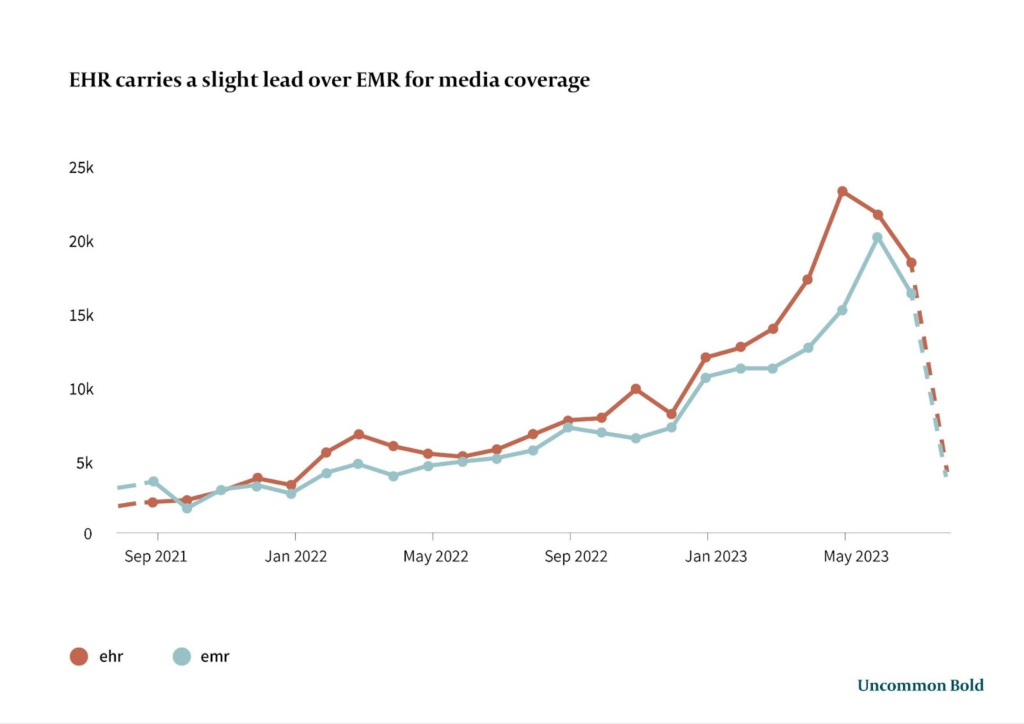
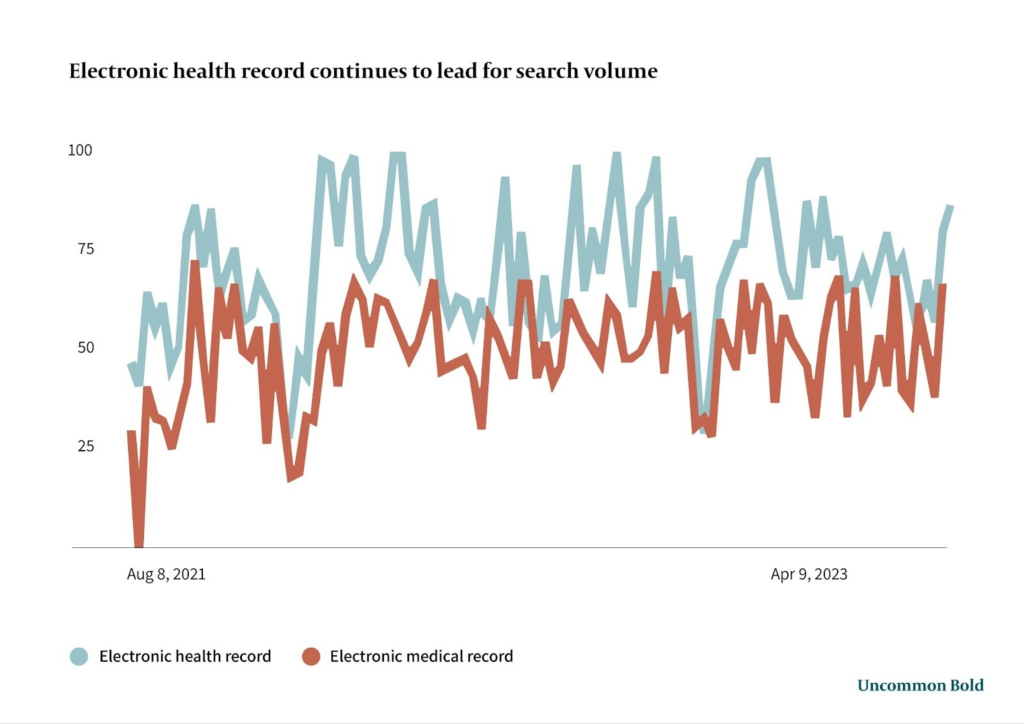
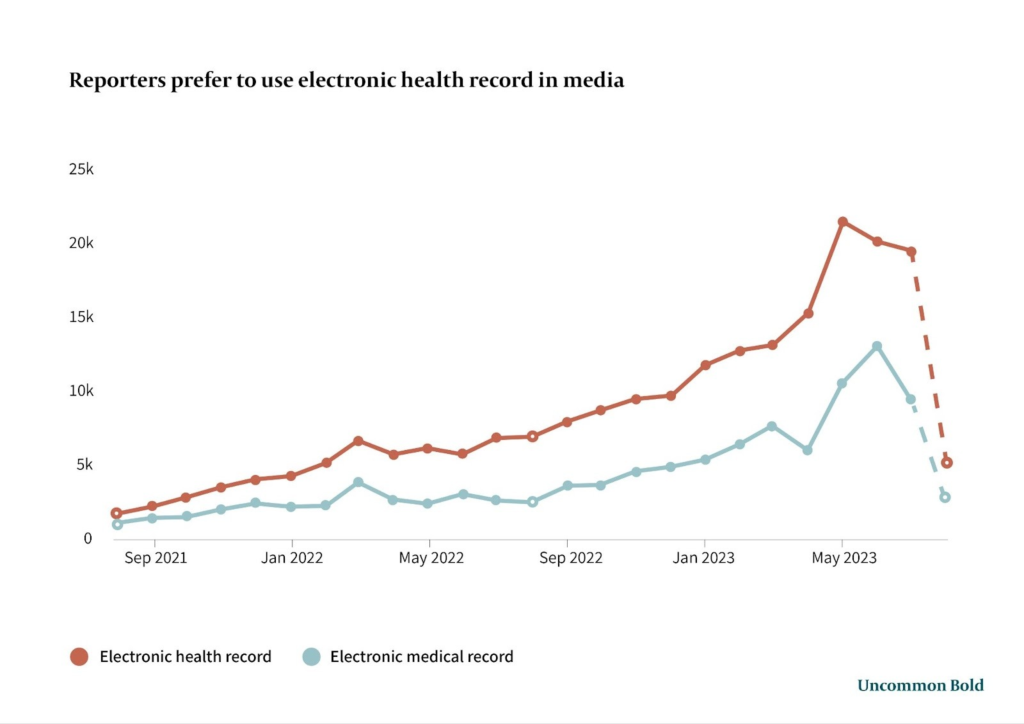
- EHR carries a slight edge among reporters and search interest (when not acronymized) when compared to EMR
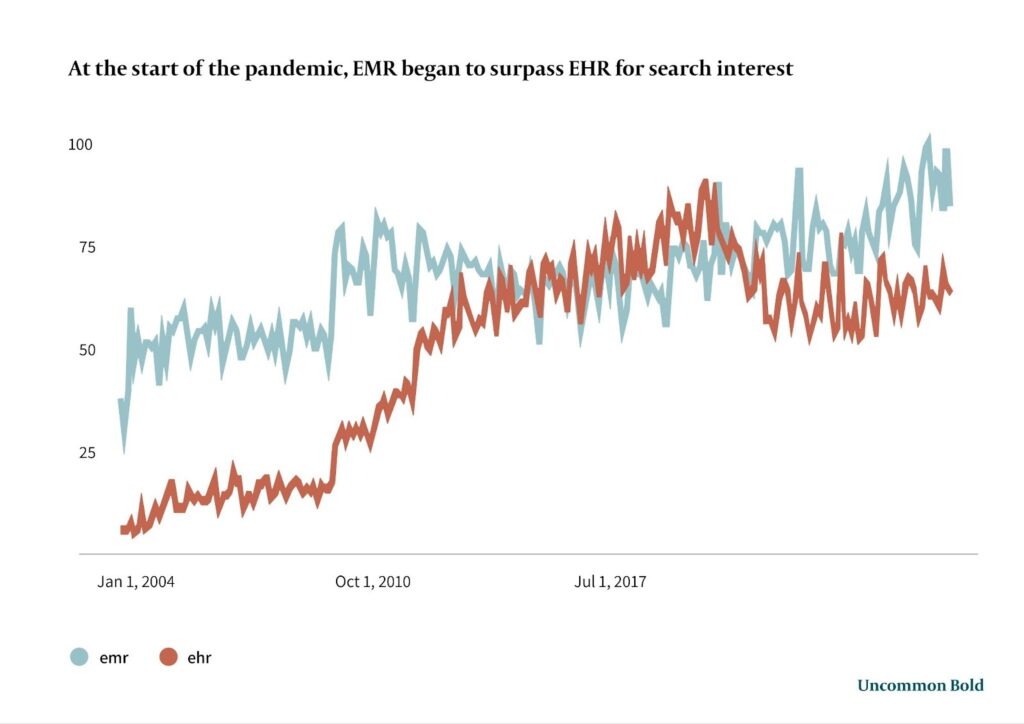
- The use of EMR closely mirrors EHR but has consistently surpassed EHR for search interest
Paper medical charts are a thing of the past, but our sector is still deciding on exactly what to call the electronic systems that replaced them. Which side are you on in the battle between using EHR (electronic health records) or EMR (electronic medical records)?
The general idea is that EMRs are “just” the digitized version of a traditional medical chart, while EHRs are described as a system to “focus on the total health of the patient—going beyond standard clinical data collected in the provider’s office and inclusive of a broader view on a patient’s care.” Check out the chart Practice Fusion developed of the differences between the two. According to Forbes: “Think of a patient’s EHR as a giant puzzle. When a provider has all the pieces—each representing records from different doctors and labs—they can make better healthcare decisions, faster.”
When it comes to health policy, the preferred term is usually EHR. Take the Medicare and Medicaid Electronic Health Record (EHR) Incentive Program, for instance. Or the fact that the Office of the National Coordinator for Health Information Technology (ONC) “use[s] electronic health record or EHR almost exclusively.” This targeted language is intentional, as it is meant to encompass the interoperable, broad-view nature of the EHR.
Considering how interrelated the two terms are, we expected the data to display a similar pattern for the term pairs, and we were right! The two term sets (both long and acronymized) almost perfectly mirror each other in both search interest and media coverage, although EMR has maintained a lead over EHR for more than two years. While we consider EMR to be more outdated and EHR to be the more modern term, right around the beginning of the COVID-19 pandemic is when the split between the two started to grow, with EMR taking the lead again. We suspect that much of this is due to the rapid adoption of telemedicine, which prompted EMR integrations, the increased need for real-time data tracking, and the overall push to improve EMR capabilities. Regardless, it’s safe to assume that although the two terms have different purposes, their search and media trends will likely continue to synchronize.
To see what term is most used in company descriptions, we researched what these five leading vendors are using:
- EPIC: “…our electronic health records chronicle the story of a patient’s healthcare over time.”
- AthenaHealth: “Best in class EHR that evolves with your needs”
- Elation Health: “Our clinical-first EHR and patient engagement tools save you time so you can focus on what you do best.”
- Veradigm (formerly Allscripts): “Allscripts electronic health records (EHRs) are industry-leading healthcare technology solutions that meet and exceed the needs of today’s healthcare organizations.”
- AdvancedMD: “All of our EHR technologies, along with our billing and patient engagement solutions, work together harmoniously.”
- eClinicalWorks: “The largest cloud-based EHR software in the U.S.”
- Oracle Cerner (formerly Cerner): “Our EHR is Cerner Millennium, and it is the basis for all our core clinical solutions.”
While some vendors use both, when looking at their homepages and social descriptions, we say EHR emerges as the top choice.
Which term do you use? Will we ever just have one winner? And do you think people understand the difference?