
Cold, Hard Facts: Examining Trends in Hydrotherapy, Cryotherapy, and Cold Plunging
Highlights:
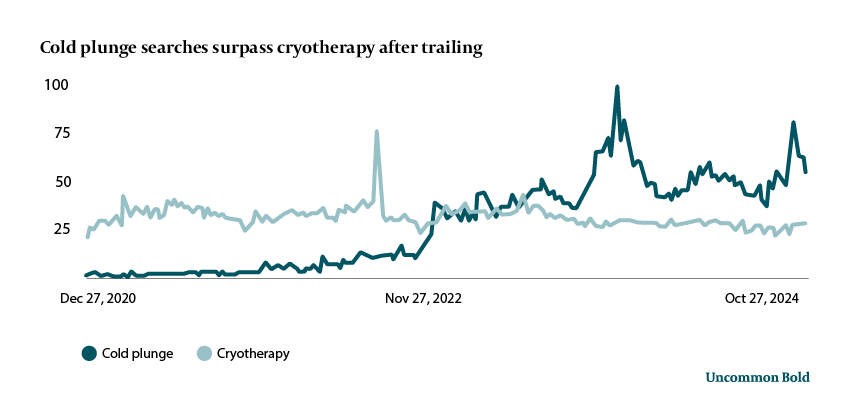
- Cold plunging has surpassed cryotherapy and hydrotherapy in media coverage and public search interest
- Social media, biohacking culture, accessibility/premiums, and marketing power are driving the trends of hydrotherapy, cryotherapy, and other unconventional recovery methods
Cold temperatures have been used for centuries to treat injuries and improve well-being. While traditional recovery methods like stretching, sleep, and proper nutrition remain essential, the changing landscape of recovery and sports performance has led to a growing interest in alternative approaches. Among these alternative methods are hydrotherapy and cryotherapy, both of which rely on cold temperatures — an age-old practice that has continuously advanced with modern technology.
Hydrotherapy dates back to ancient civilizations across the globe, where it was used for relaxation and healing. However, hydrotherapy wasn’t widely recognized as a rehabilitation method until the 19th century, largely due to Father Sebastian Kneipp, who famously used it to treat tuberculosis. Hydrotherapy involves submerging all or part of the body in water to enhance recovery and restore exercise capacity. There are various methods of hydrotherapy such as cold water immersion, hot water immersion, contrast water immersion, and thermoneutral water immersion.
In contrast, cryotherapy involves exposing the body to extremely cold temperatures using cold air or nitrogen gas. This process lowers tissue temperature, which aids in reducing inflammation and accelerating muscle recovery. Similar to hydrotherapy, advancements in cryotherapy emerged in the 19th century when Dr. James Arnott used carbon dioxide snow as a treatment. His work led to the creation of vacuum flasks, a key component of modern cryotherapy. The first whole-body cryotherapy chamber was developed in Japan in the late 1970s, but it wasn’t until the early 2000s that it was introduced and used in the United States.
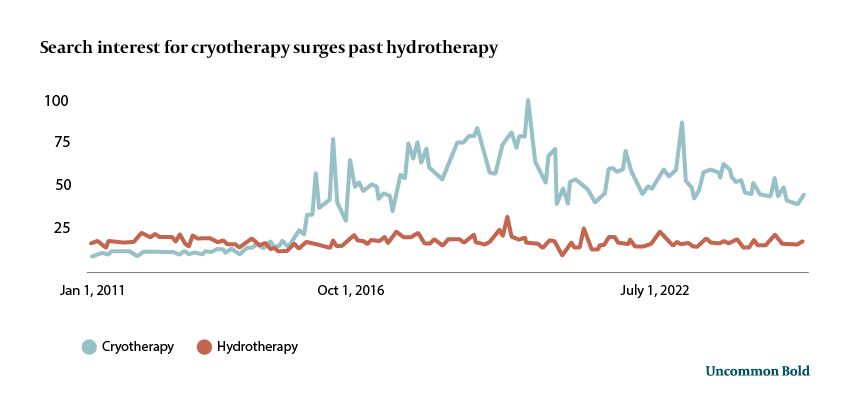
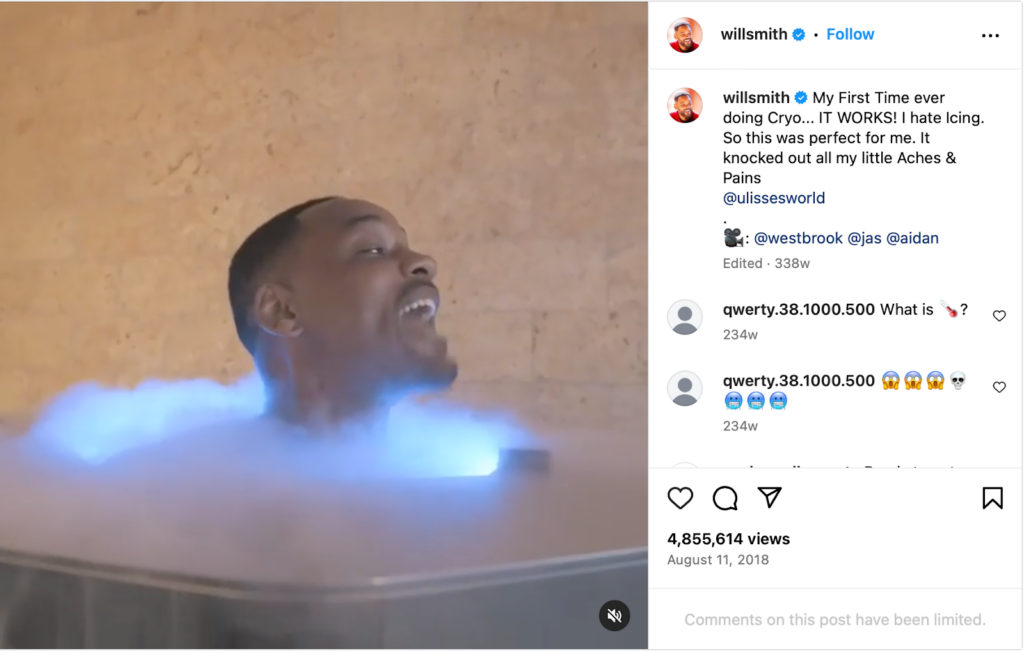
While the number of individuals searching for hydrotherapy has remained steady over the past decade, cryotherapy has rapidly surged in popularity. 2015 was a hot year for cryotherapy, as many high-profile athletes and celebrities began raving about its benefits for recovery, weight loss, and skincare during this time. That same year, Bleacher Report interviewed NBA superstar LeBron James as he stepped into a cryochamber. Over the years, other A-list celebrities have continued to promote the practice, often using social media as a platform for endorsement. Additionally, media coverage spiked in 2015 when a salon worker tragically died in a cryotherapy machine. The incident may have been a catalyst for the surge in public interest around cryotherapy, as reflected in the graph below.
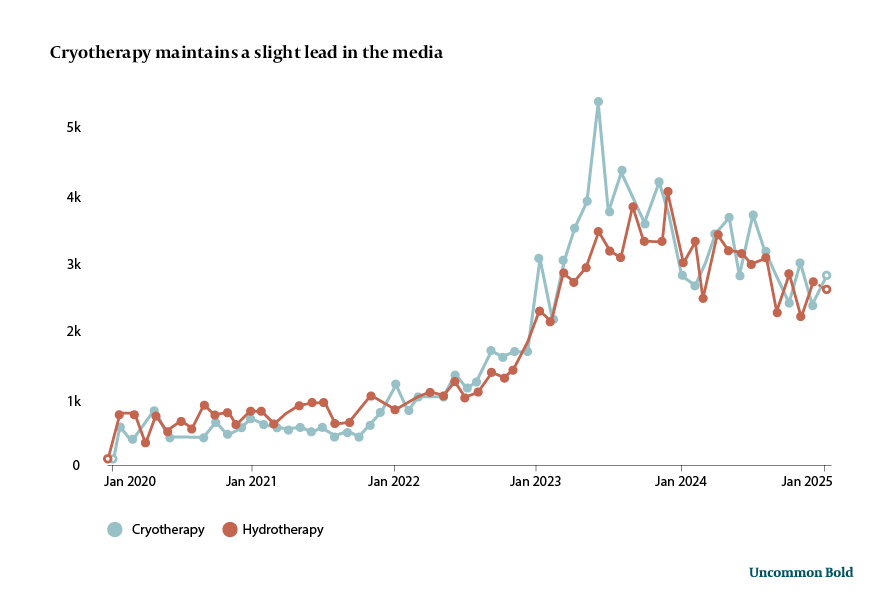
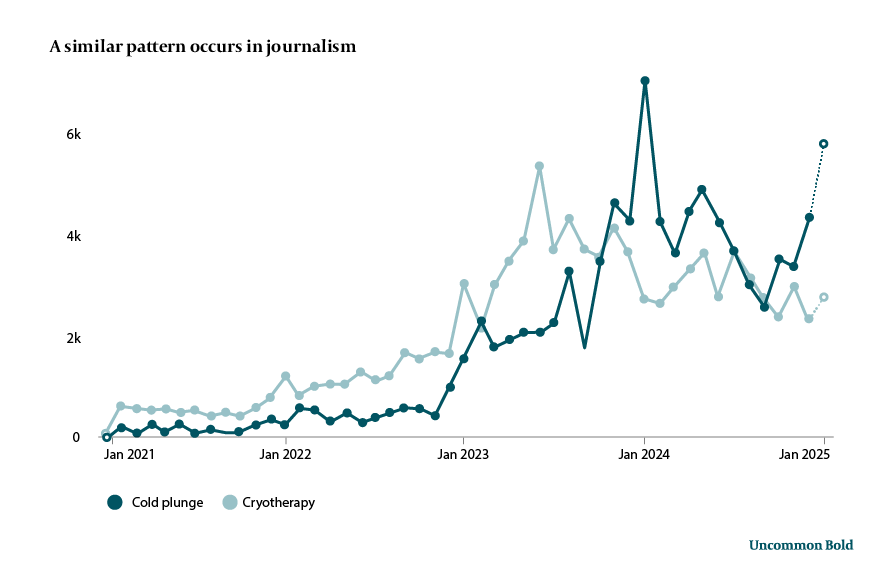
There has also been a steady rise in media outlet coverage of both recovery methods, although cryotherapy maintains a slight lead. Cryotherapy saw a large spike in 2023, and one possible reason for this peak could be the findings presented at the 2023 European Congress on Obesity. In front of 2,400 delegates from 70 countries, Italian researchers reported that whole-body cryotherapy benefits individuals with obesity by improving cholesterol and blood fat levels, reducing waist circumference, and lowering blood sugar levels.
Although cryotherapy centers are popping up around the country, it remains difficult for the average consumer to access and is generally not covered by health insurance. A single session at a clinic can cost between $40 and $100 with individuals usually seeing benefits after three or four treatments. Installing a whole-body chamber in your home costs on average $40,000. Additionally, there is limited scientific research and evidence on its effectiveness, and it is not FDA-approved to treat any medical condition.
There are more affordable alternatives for individuals who are trying to relieve their inflammation and muscle soreness like cold plunging. It is a form of hydrotherapy where you fully submerge yourself into cold water. While you can receive this treatment at dedicated cold-plunge centers, you can also DIY by filling a bathtub with ice water or jumping into a natural cold body of water. Although already popular among athletes, cold plunging began trending on social media in 2023, with celebrities like the Kardashians and Hailey Bieber posting about their experiences.
Although trending in the media and among the public, opinions on these recovery methods remain mixed among healthcare organizations and professionals. Hydrotherapy is widely accepted in the medical field, with hospitals and physical therapy clinics alike utilizing it for rehabilitation and treatment. Cold plunging and hydrotherapy are more commonly used in sports recovery than in general care. However, medical cryotherapy, like localized treatment for prostate cancer, is FDA-approved and used in hospitals, including the renowned Mayo Clinic.
The modern recovery landscape is vast and continuing to grow. Biohacking culture and marketing power drive an individual’s choice on how to improve their well-being. Although cold plunging has taken the overall lead over the other two examined terms, this may only be temporary. As research reveals new findings and technology advances, it will be interesting to see which methods stick and which are just fads.
Have you ever tried hydrotherapy, cold plunging, or cryotherapy?